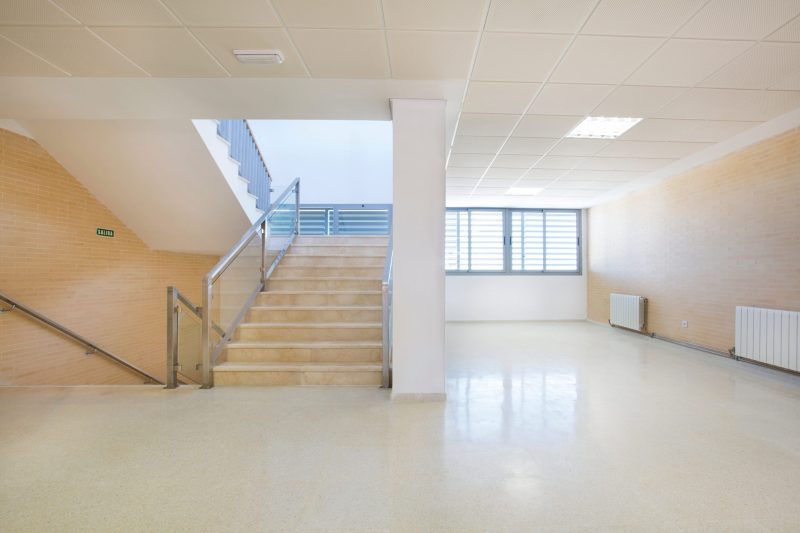

Resilient flooring is designed to withstand the demands of busy commercial environments, but even durable flooring needs the right care. Heavy foot traffic, rolling equipment, spills, dirt, furniture, and inconsistent cleaning can all contribute to premature wear.
For schools, healthcare facilities, retail spaces, offices, and other commercial properties, protecting the floor is about more than keeping it looking good. A consistent maintenance program can help preserve its appearance, performance, and useful life.
Rikett Quartz Tile (RQT) is a top resilient flooring option for demanding commercial environments. With proper care and maintenance, quartz tile can provide long-term performance while standing up to everyday traffic.
Start With a Consistent Cleaning Routine
One of the easiest ways to protect resilient flooring is also one of the most important: clean it consistently. Dirt and grit tracked into a building can act like an abrasive under shoes, carts, and other traffic. Allowing debris to accumulate can gradually contribute to surface wear, particularly in entrances, hallways, and other high-traffic areas.
Your cleaning schedule should reflect how the space is actually used. A busy retail entrance may require significantly more attention than a lightly used office.
For RQT, Rikett recommends routine cleaning with a neutral cleaner. Using the right cleaning products and methods helps avoid unnecessary wear from harsh or incompatible chemicals.
Address Spills and Stains Promptly
Commercial floors are bound to encounter spills. Coffee, food, cleaning products, water, and other substances can end up on the floor during the normal course of a busy day. Cleaning spills promptly helps prevent staining and reduces the chance of substances being tracked across a larger area.
A quick response is especially important in facilities where cleanliness and appearance are priorities. Rather than waiting for the next scheduled cleaning, deal with spills as they occur.
Protect Your Flooring
RQT can handle substantial everyday traffic, but dragging heavy objects across the surface can create unnecessary stress. When moving furniture, shelving, equipment, or other heavy objects, use appropriate moving techniques and protective measures. Lift items when possible rather than dragging them across the floor.
For equipment and furniture that remain in place, consider the type and condition of the contact points beneath them. Damaged or inappropriate feet and casters can contribute to scratching, indentation, or other surface damage.
Pay Extra Attention to High-Traffic Areas
Not every section of a building experiences the same amount of wear. Entryways, corridors, checkout areas, hallways, waiting rooms, and spaces surrounding frequently used equipment may receive significantly more traffic than other areas.
These locations deserve closer attention during routine inspections. Look for changes in appearance, unusual wear, stains, damaged tiles, or areas where dirt is accumulating. Adjusting maintenance schedules based on actual traffic patterns can be more effective than treating every area of a facility exactly the same way.
Use Entryway Protection
A significant amount of dirt and moisture enters commercial buildings through people’s shoes.
Entrance areas can serve as the first line of defense for the rest of the flooring system. Properly placed mats or walk-off systems can help capture dirt and moisture before they are carried farther into the building. Keeping entry mats clean is important, too. An overloaded mat cannot perform effectively and may simply transfer dirt into the building.
Don’t Ignore Small Problems
Minor flooring issues are easier to address when they are identified early. During routine cleaning and inspections, look for damaged tiles, unusual wear, lifting edges, cracks, or other changes. Addressing an issue early may prevent it from becoming a larger maintenance concern.
It is also useful to keep track of areas that experience recurring problems. Repeated damage may indicate an underlying issue involving traffic patterns, equipment, furniture, moisture, or maintenance practices.
Choose Flooring Designed for the Environment
Maintenance is only part of the equation. The flooring material itself should be appropriate for the demands of the space.
Rikett Quartz Tile is designed for commercial applications where floors experience heavy foot and wheeled traffic. RQT is available in a range of colors and patterns, allowing facilities to balance performance with design flexibility.
Its low absorption rate also contributes to stain resistance and easier maintenance, while the commercial-grade surface is designed for durability without requiring traditional waxing.
For a facility manager or building owner, choosing resilient flooring that matches the environment can make a meaningful difference over the long term.
Resilient Flooring From Rikett Quartz Tile
The right flooring should be able to handle everyday demands without requiring complicated maintenance. Rikett Quartz Tile combines the natural properties of quartz with a commercial flooring system designed for demanding environments. It can be used in a variety of applications, including healthcare facilities, schools, retail spaces, offices, corridors, and other high-traffic areas.
Protecting your resilient flooring starts with selecting the right product and continues with consistent cleaning, preventive maintenance, and attention to high-traffic areas.
Interested in learning whether RQT is right for your next flooring project? Contact the Rikett team at 855-745-3887 to discuss your project and explore resilient flooring options. Follow us on social media for the latest trends, topic answers, and new product releases.